The message from Sunday's event will undoubtedly reverberate globally. It's a landmark occasion that will be remembered for generations and will inspire many other states to introduce the story of Rajendra Chola into school curricula, says Tarun Vijay.

The gross tax revenues have touched 65 per cent of the Budget estimates at Rs 17.81 lakh crore during the first eight months of the current fiscal till November, propelled by corporate and personal income tax mop-up, according to the Economic Survey 2022-23 presented in Parliament on Tuesday. The survey, authored by Chief Economic Advisor V Anantha Nageswaran, said the 'substantial reforms' in India's taxation ecosystem post-2014 and policy reforms have removed the distortionary incentives from the economy. Reforms like GST, reduction in corporate taxes, exemption of sovereign wealth funds and pension funds from taxes, and removing Dividend Distribution tax have reduced the tax burden on individuals and businesses.

The deficit increased to $ 57.2 billion or 2.1 per cent of gross domestic product (GDP) in 2018-19 as against 1.8 per cent in the previous year.

The country's exports are expected to contract by 5.8 per cent and imports by 11.3 per cent during the second half of the current financial year, though implementation of several measures by the government would help support exports going forward, according to the Economic Survey 2021. With gradual recovery of economic activities, the survey said that imports and exports have picked up. During the first half of 2020-21 (April-September), exports dipped by 21.31 per cent to $125.25 billion while imports declined by 40 per cent to $148.69 billion.

The plea filed by Nalanda resident Akhilesh Kumar submitted that in terms of the constitutional mandate, only the Union government is empowered to conduct a census.

India needs to play a more constructive role in global economy, particularly in matters like international trade and capital flows, government said on Thursday.

Stressing that economic growth will only move upwards, the Reserve Bank of India Governor Shaktikanta Das on Friday pegged the GDP growth rate for the next financial year at 10.5 per cent, though a tad lower than the government's projection of 11 per cent. The projection is in line with the estimates in the Union Budget 2021-22 presented in Parliament earlier this week. The Economic Survey, tabled by the government in Parliament recently, has projected that the economy will grow at 11 per cent, up from an estimated historic decline of 7.7 per cent in 2020-21, on account of the COVID-19 pandemic.

Survey calls for reorienting policies to promote young firms which have the potential to become big, rather than small MSME firms which remain small.

'I am optimistic about the Budget because of the fiscal discipline the government has committed to.'

Finance Minister Nirmala Sitharaman is likely to strike a fine balance between being fiscally prudent and growth supportive when she presents her fourth straight budget on Tuesday, which is expected to have plans to boost spending to revive investment and create jobs. The Budget for the fiscal year starting April 1, 2022 is likely to raise spending on infrastructure to set the economy on a firmer footing. The stage for the Budget presentation was set by the Economic Survey stating that the government has the fiscal space to do more to support the economy that is forecast to grow at a healthy 8-8.5 per cent growth in the 2022-23 fiscal.

Chief Economic Advisor (CEA) K V Subramanian will be leaving the finance ministry and returning to academia on completion of his three-year term. The government had appointed Subramanian, an ISB Hyderabad professor, as the CEA in December 2018. He had succeeded Arvind Subramanian, who quit the position close to a year ahead of his extended tenure. Subramanian's three-year term would have come up for renewal in December but he decided to return to academia.

India's economic growth will be above 6 per cent in the current fiscal as the country has managed to strengthen its macroeconomic stability and performance even in a period of large global shocks, RBI Monetary Policy Committee (MPC) Member Ashima Goyal said on Monday. Goyal further said that a global slowdown reducing India's export growth, geopolitics fueling oil and food prices, and erratic weather are some of the continuing risks that the country faces. "India has managed to strengthen its macroeconomic stability and performance even in a period of large global shocks.

The unemployment rate for people aged 15 years and above in urban areas dipped to 6.4 per cent in the July-September quarter, according to the National Sample Survey Survey (NSSO). Joblessness, or unemployment rate, is defined as the percentage of unemployed people in the labour force. The unemployment rate in the September quarter of FY24 was 6.6 per cent.

The Economic Survey called for improving business environment.

With the dissolution of former chief statistician Pronab Sen-led Standing Committee on Statistics (SCoS) by the Ministry of Statistics and Programme Implementation (MoSPI), the National Statistical Commission (NSC) has regained prominence as the primary statistical body to address issues regarding results, methodology and questionnaire, among others. A MoSPI official in an email informed the 16-member SCoS about the decision to dissolve it, citing that its work was "overlapping" with that of the Steering Committee for National Sample Surveys (NSS), which was set up in June this year.

The World Bank on Tuesday raised the growth forecast for the Indian economy to 7 per cent for the current fiscal year on the back of recovery in agri sector and rural demand. World Bank had in June projected India to grow at 6.6 per cent for FY24. According to the World Bank Report released on Tuesday, India's growth continues to be strong despite a challenging global environment.

The bench noted even the high court has said in its judgement that 80 per cent of the work related to the survey has been completed.

The Budget would preserve macro-economic stability.

Salaries in India are expected to increase by 10.3 per cent in 2023, highest among major world economies and Asian peers, according to Aon plc. In 2022, salaries in India witnessed an actual increase of 10.6 per cent in 2022. As per Aon plc's 28th Annual Salary Increase Survey in India, double-digit salary growth will continue in India despite economic volatility, largely as a response to high attrition rates.

The proposed units comprise seven coking coal washeries and 13 non-coking coal washeries.

Indian economy is poised to do better on the back of reforms undertaken by the government and is expected to clock a 6.5-7 per cent growth in the remaining part of the decade, Chief Economic Advisor (CEA) V Anantha Nageswaran said on Tuesday. Addressing reporters here after the tabling of the Economic Survey in Parliament by Finance Minister Nirmala Sitharaman, Nageswaran said that by and large, inflation is likely to be "well behaved" in FY2023-24 barring headwinds. "My optimism is that in the coming decade, rest of the decade, the potential GDP growth, without taking into account export potential, because global economy is still rife with uncertainty, the growth rate would be around 6.5 to 7 per cent, rather than between 6 per cent and 6.5 per cent," he said.

A query has been raised about the "missing" Rs 1.7 trillion fiscal hole in India's financial accounts. This is so because the Budget uses the revised estimates, a projection of how much the government was expected to earn, while the Economic Survey uses the first actual numbers.
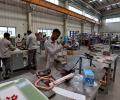
India's manufacturing sector growth fell to a joint 11-month low of 56.5 in November, restricted by competitive conditions and inflationary pressures amid a softer increase in factory orders, a monthly survey said on Monday. The seasonally adjusted HSBC India Manufacturing Purchasing Managers' Index (PMI) fell from 57.5 in October to 56.5 in November, signalling a softer improvement in the health of the sector. However, the pace of growth remained above its long-run average.

The birth anniversary of Dr Bhimrao Ramji Ambedkar, whose political influence has surged with the passage of time, on Monday was marked by bitter trading of charges between the ruling BJP and opposition parties as they fought for his legacy.

It said while Indian IT services companies were the "disruptors" and had created the modern offshoring industry, they are now incumbents, challenged by a host of specialised and niche start-ups that have emerged in the new digital environment.

Union Finance Minister Nirmala Sitharaman on Tuesday commended Indian financial sector regulators for doing a "world-class job" and bringing greater transparency into the system. Underlining that she is not against questioning or critiquing regulators, Sitharaman said there is a need to be "extremely conscious" about contributions made by them as well. Speaking at the Financial Express Best Banks Awards, the finance minister said, "I strongly recommend that facts are taken on board before we discuss anything to do with the regulators, strictly speaking."

Revenue buoyancy of GST will be key to improve the resource position of both central and state governments.

The Commerce and Industry Ministry has circulated a draft Cabinet note for inter-ministerial consultations.

'It has the potential to sow seeds of furthering discord when the direction of the discourse is aimed at propagating the perceived supremacy of 'cultural nationalism' from a distant past over the prevailing dominance of 'Constitutional nationalism',' argues N Sathiya Moorthy.

Finance Minister Nirmala Sitharaman will present the Union Budget on Tuesday as the Monsoon Session of Parliament gets underway next week with the united opposition set to corner the National Democratic Alliance government on issues ranging from the NEET paper leak case and railway safety.

South Indian filmmakers have kept their focus on the single-screen cinemagoer. They have kept their finger on the pulse of the single-screen cinema fan, who goes to movies once a month or more, to forget his weekly chores, explains Ambi Parameswaran.

The adjusted gross revenue (earnings from sale of telecom services) of the top three telecom companies in India - Bharti Airtel, Vodafone India and Idea Cellular declined by 7.98 per cent, 5.14 per cent and 4.91 per cent respectively during third quarter of 2016-17.

'Consider 40% to 50% in equities, 10% in gold as a hedge, and the remaining 30% to 40% split between multi-asset funds and hybrid funds.'
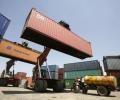
On the other hand, 16 or half of all states and Union Territories account for only 3 per cent of all exports.

A quarter of the stocks have been replaced since 2019, marking the evolution of India's economy.

Policy rates have been reduced substantially in 2015.

Per capita income in the state has consistently been below the national average for at least 24 years. However, it has narrowed the gap with the all-India level in recent years.

In a significant move, state-run oil producer Oil India Limited (OIL) has finished drilling its first well in the Andaman sea while Oil and Natural Gas Corporation (ONGC) has just started drilling operations in the area, said officials.

From the Sensex pack, Reliance Industries, Bajaj Finserv, HDFC Bank, Adani Ports, Maruti Suzuki India, Axis Bank, Hindustan Unilever, Sun Pharmaceuticals and Asian Paints were among the laggards. Reliance Industries fell the most by 2.38 per cent to close at Rs 1,171.10 apiece.
